
Drain Cleaning in Lancaster, PA
A drain rarely stops all at once. It slows for weeks, gurgles, leaves a ring in the tub, and then one evening the water stays put. We clear slow and stopped drains in kitchens, bathrooms, laundry rooms and basement floor drains, and the work starts with one question: is the clog in a single fixture’s line, or further down, where every drain in the house comes together?
What Builds Up Inside a Drain
Most clogs are made of the same few things, and each one settles in its own part of the system.
- Grease. Poured down the kitchen sink warm, it cools in the pipe and coats the walls. Food scraps and soap stick to the coating until the opening is the size of a pencil.
- Hair and soap. In bathroom sinks and tubs, hair catches on the stopper and in the trap, and soap scum binds it into a mat.
- Wipes. Even wipes sold as “flushable” don’t break apart the way toilet paper does. They snag on joints and roots in the main line and build into a dam.
- Roots. Tree roots work into the joints of old clay and cast iron sewer laterals for the moisture, then catch everything that comes down the line.
- Scale. Lancaster County’s hard water leaves calcium and magnesium on the inside of old galvanized and cast iron drains, and the rough, narrowed pipe holds on to grease and hair that a smooth one would pass.
- Lint and lost objects. Washing machines send lint down the standpipe, and toilets meet cotton swabs, floss and small toys.
Each Drain in the House Clogs Its Own Way
Kitchen Sinks
Kitchen clogs are mostly grease, and they usually sit past the trap, in the branch line inside the wall. In a double-bowl sink, water rising in the other bowl means the clog is past the point where the two meet, and a dishwasher that won’t drain often shares the same blockage.
Bathroom Sinks and Tubs
Bath drains clog close to the fixture, in the pop-up stopper, the tub drain or the first foot of pipe, and pulling the stopper to clear the hair fixes many of them. When a sink and the tub beside it slow down together, the clog is where their lines join.
Toilets
A toilet clog sits in the bowl’s built-in trap or just below it, within reach of a flange plunger or a closet auger. One that clogs again and again usually has something lodged in its trapway, a partial blockage further down, or an early low-flow design that never flushed well.
Laundry and Basement Floor Drains
A washer pumps water out faster than many drains take it, so an overflowing standpipe can be lint or a pipe too small for the pump. The basement floor drain is the lowest opening in the house and the first place a main-line backup shows. One that smells of sewer gas usually just has a dry trap, and a few quarts of water bring the seal back.
One Slow Drain or the Whole House
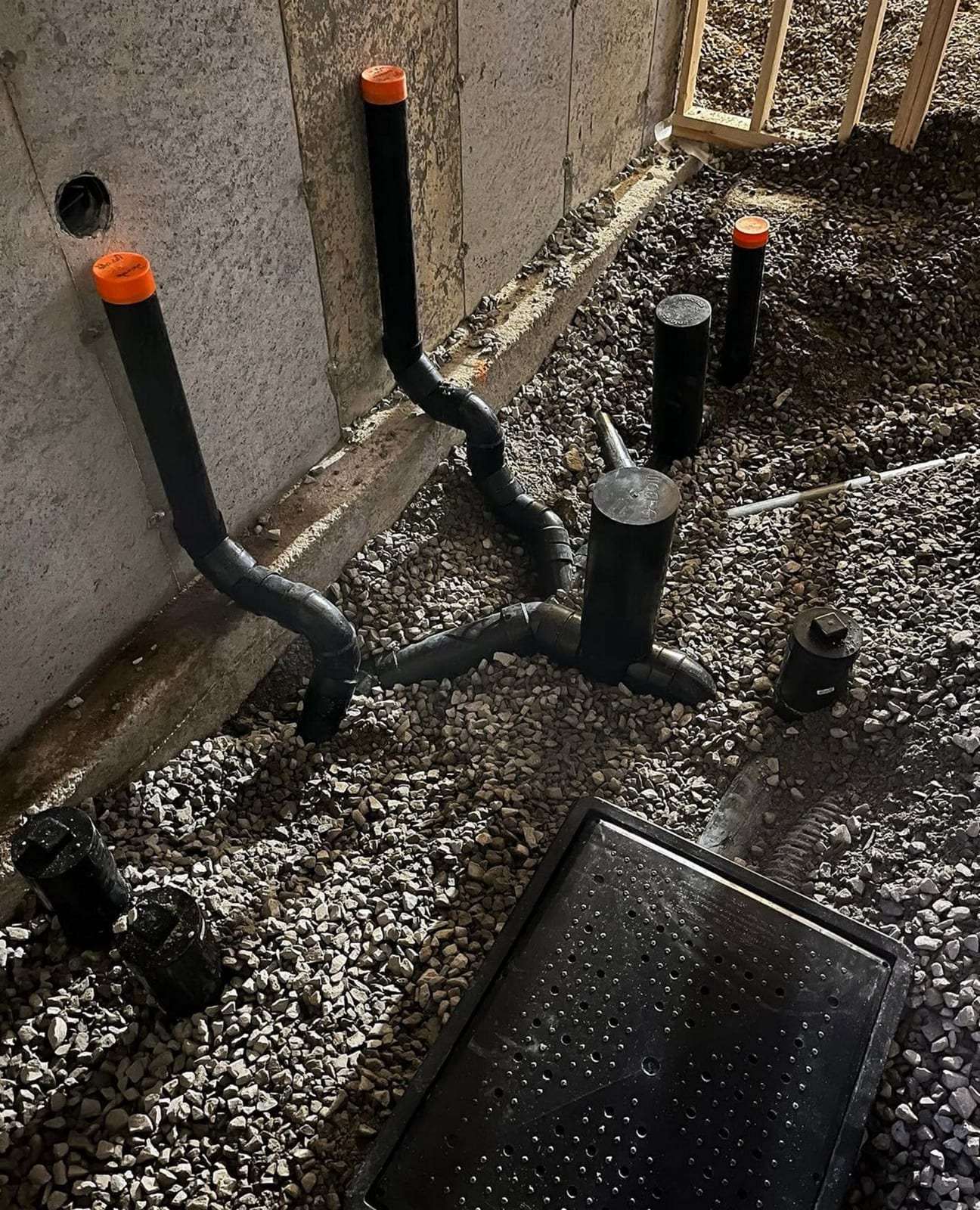
Every drain in a house runs into one building drain, usually under the basement slab or along the foundation wall, and from there into the sewer lateral that runs out to the street. Where the clog sits along that path decides what you see.
One slow fixture, with everything else running fine, means a local clog in that fixture’s trap or branch line. Several drains slowing at once, toilets gurgling when the tub empties, or water rising in the basement floor drain when the washer pumps out all point to the main line or the lateral beyond it. A main clogged with roots or broken pipe is a job for sewer line repair, not just another pass with a cable.
If water is coming up from the floor drain, stop running water upstairs, including the washer and the dishwasher. Don’t pour chemical cleaner into a backed-up main, and don’t open a cleanout cap on a line that’s full: the water behind it comes out with force, and it’s sewage.
Cable, Water or Camera: How Drains Get Cleared
Plumbers clear drains with a few standard tools, and the right one depends on where the clog is, what the pipe is made of and whether the line keeps clogging. A cable machine is the trade’s everyday tool; hydro-jetting and camera inspection come in when a line needs scouring or a look inside.
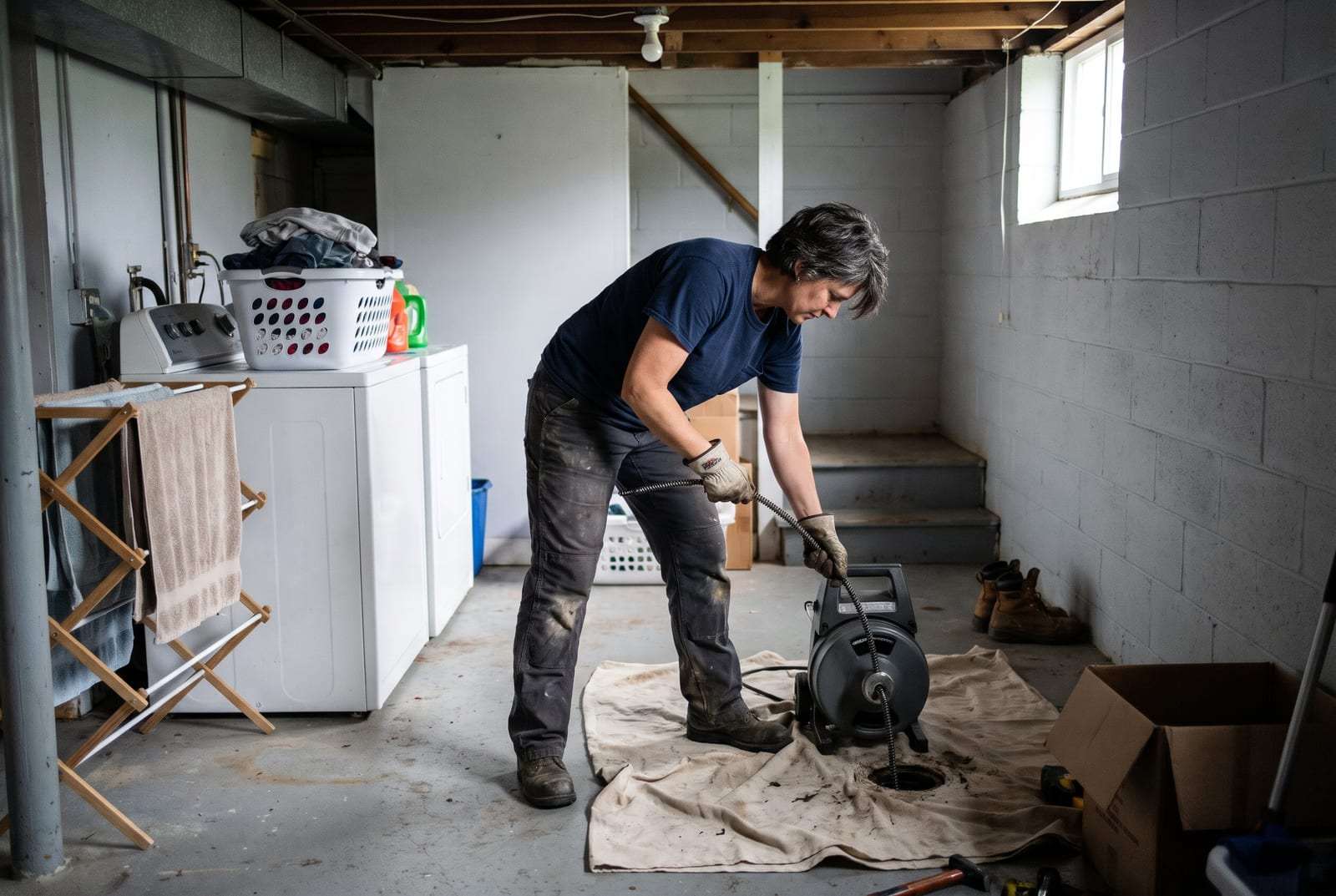
A cable bores through a clog and drags part of it back out. That gets water moving but can leave grease or scale on the pipe walls, which is why a kitchen line or a root-filled lateral that was only cabled often slows down again within months. Jetting scrubs the walls clean but needs sound pipe to work against. A camera clears nothing, but it shows whether the line is cracked, sagging, full of roots or simply dirty, and that decides the fix.
| Method | Best for | Pipe types | Limits |
|---|---|---|---|
| Plunger or hand auger | Sink traps, tub drains and toilets: a clog within a few feet of the fixture | Any; a closet auger’s sleeve keeps the cable off a toilet’s porcelain | Short reach, so a clog in the branch or main line stays put |
| Cable machine (snaking) | Branch and main lines: hair, paper, grease plugs and root masses | Cast iron, PVC, ABS, galvanized and clay, with a cable and cutter sized to each | Opens a path rather than cleaning the whole pipe wall, so grease and roots can come back |
| Hydro-jetting | Grease-coated kitchen lines, sludge, and roots in a main that keeps clogging | Sound PVC, ABS and cast iron in good condition | The pressure can make a cracked or rusted-through pipe worse, so the line is usually looked at first |
| Camera inspection | Finding out why a line keeps clogging: roots, a sag, a crack or an offset joint | Any pipe the camera head fits, usually entered from a cleanout | Shows the problem but clears nothing, and standing water can hide the view |
Chemical Cleaners and Repeat Clogs
Do chemical drain cleaners hurt old pipes?
They can. Caustic and acid cleaners work by heat and reaction, and they sit against whatever part of the line is blocked. On old galvanized steel and cast iron, already thinned by scale and rust, that speeds up corrosion; on plastic, the heat is hard on the pipe and its glued joints. And if the clog holds, the next person to open the trap is working in caustic water.
Can I plunge a drain after pouring in a chemical cleaner?
Don’t. Plunging can throw the cleaner back out of the drain and into your face and eyes. If cleaner is already sitting in a stopped drain, say so when you call.
Why does the same drain keep clogging?
Usually because the last clearing opened a path but left the cause: grease still coating the pipe walls, roots growing back through a joint, or a section of pipe that sags and holds water and debris. A line that clogs more than once or twice a year is worth a camera look before the next round of cabling, and a main that keeps backing up is often a sewer line problem rather than a drain clog.
Are enzyme drain cleaners any better?
They’re gentler. Enzyme and bacterial products digest hair, grease and food slowly, over days, without harming pipes. They suit a drain that runs a little slow, but they won’t open a stopped one or cut through roots.
What keeps a drain from clogging again?
Habits do most of it: grease into a can instead of the sink, a hair catcher in the tub, nothing but toilet paper in the toilet, and a lint trap on the washer hose. Old cast iron and galvanized drains catch debris more easily once they have clogged, so the habits count for more there.
When the Plunger Isn’t Enough
If a drain keeps slowing down, or more than one fixture is backing up, call or book an estimate. Tell us which drains are slow, whether the basement floor drain is involved and what you’ve tried so far, including any cleaner already in the line.