
Our Standards
Most good plumbing is never looked at again once it’s done: a drain that keeps its fall, a joint that stays dry, a shutoff that closes the day it’s needed. Getting there means finding the cause before reaching for a fix, building to the code and testing before anything is covered.
Every Job Starts the Same Way
We Ask What You’re Seeing
When you call or send us a message about a leak, a slow drain or a water heater that has quit, we ask what you’re seeing and set a day for a visit. It helps to know which fixture it is, what it’s doing and when it started.
If It Can’t Wait, We Explain the Shutoff
Some problems won’t sit still until the visit, like water coming through a ceiling. Tell us, and we’ll explain what to shut off in the meantime; it goes faster if you already know where your main shutoff is.
The Owner Comes Out
Xander Pace, the owner, comes out to the house and looks over the problem. A careful look starts where the symptom shows and follows it back: a ceiling stain sits below the leak rather than at it, and a slow tub can be a clog in a line it shares with the sink.
What He Found and What He Recommends
Before anything is opened or replaced, he tells you what he found and what he recommends. It’s worth asking what the fix involves, such as whether a wall or floor has to be opened, before you decide.
Work Starts Once You’ve Agreed to the Plan
Work starts once you’ve agreed to the plan, and not before. If something about it isn’t clear, that’s the time to ask.
The Stages Most Plumbing Jobs Go Through
Whoever does the work, most plumbing jobs move through the same stages in the same order, and a homeowner who knows them can keep things moving.
| Stage | What usually happens | What the homeowner should prepare |
|---|---|---|
| First contact | You describe the problem and a day is set for a visit. | Which fixture, what it does, when it started; a photo helps. |
| The look | The plumber traces the symptom back to its cause. | A clear way in: the sink cabinet emptied, room around the water heater. |
| Findings and plan | You hear what was found and what is recommended. | Your questions, and any choices about fixtures or finishes. |
| Permit, where required | Work beyond simple repairs may need a municipal permit first. | Your municipality’s name, from the tax bill. |
| The work | Water, and gas if it’s involved, is shut off; old parts come out and new ones go in. | A plan for some hours without water, with pets and children kept clear. |
| Testing | New lines are checked for leaks and drains are run before anything is closed up. | Run each fixture yourself afterward and watch for drips. |
| Inspection, where required | The inspector checks the work, sometimes before walls or a slab close. | Access to the house on inspection day. |
Work You Can See Before the Walls Close
Most of a plumbing system ends up behind drywall or under concrete, so the standard has to be met while the work is in plain sight: drain lines with a steady fall, typically a quarter inch per foot on the smaller house drains, supply lines supported so they don’t sag or knock, and every new joint tested while it can still be seen.
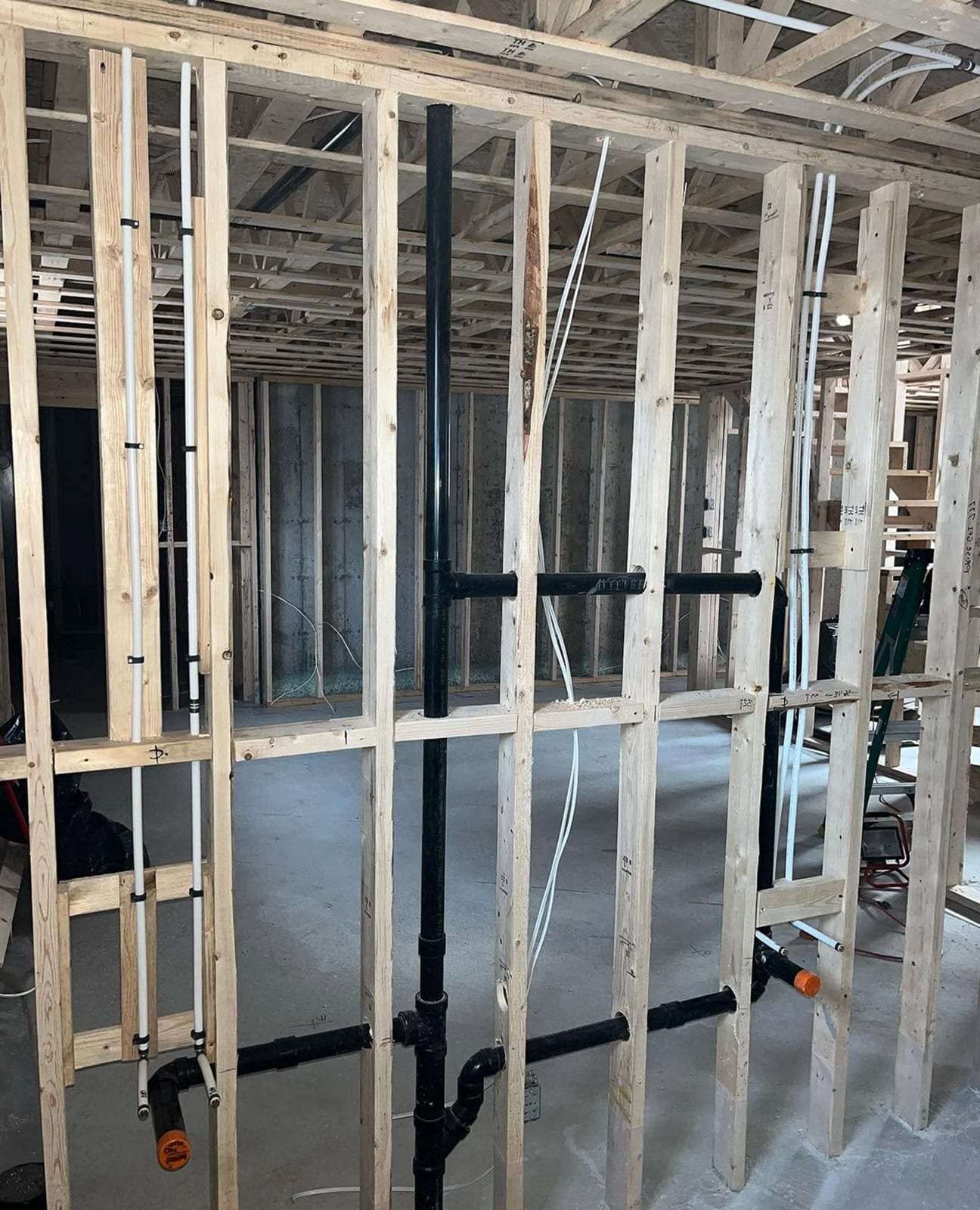
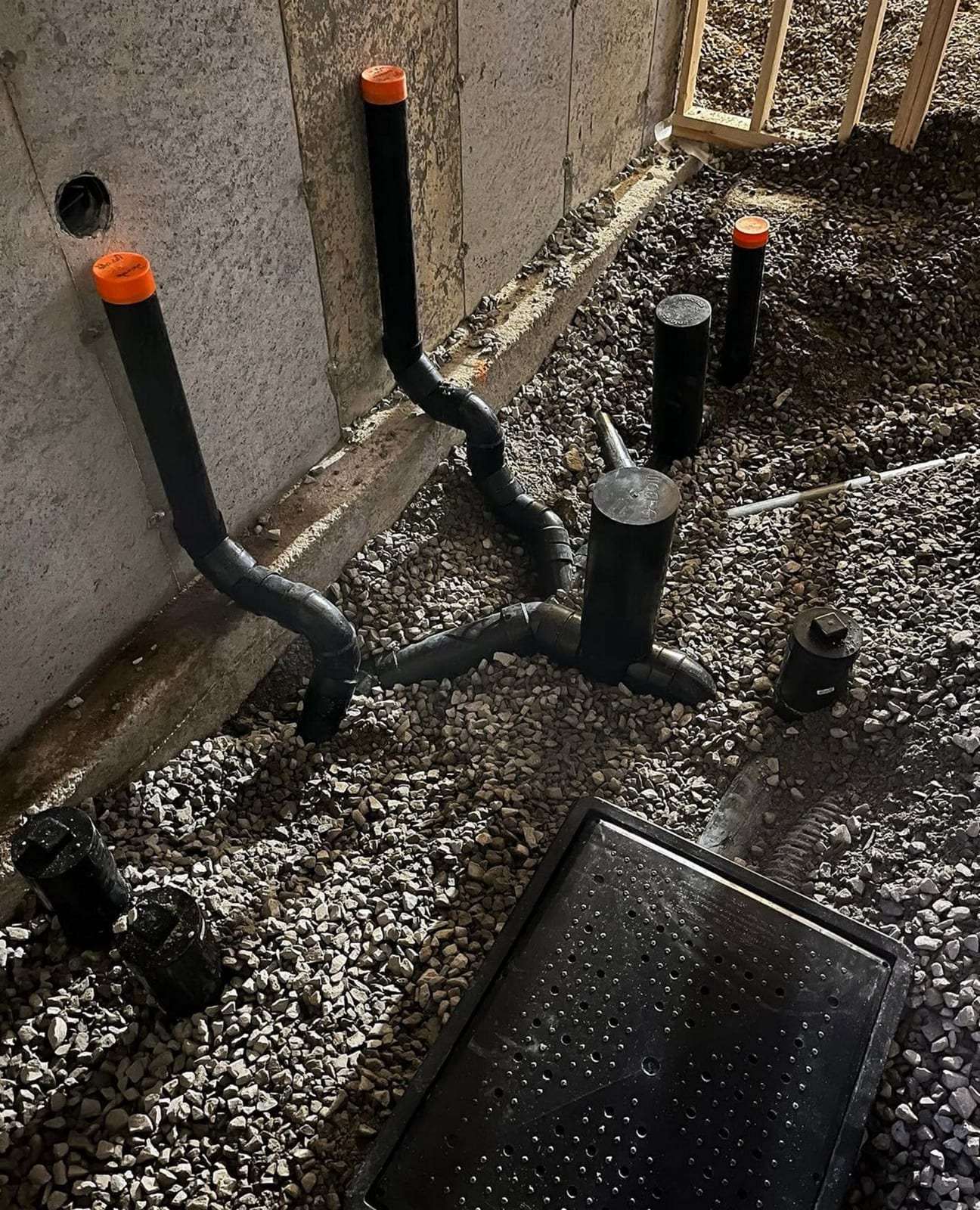
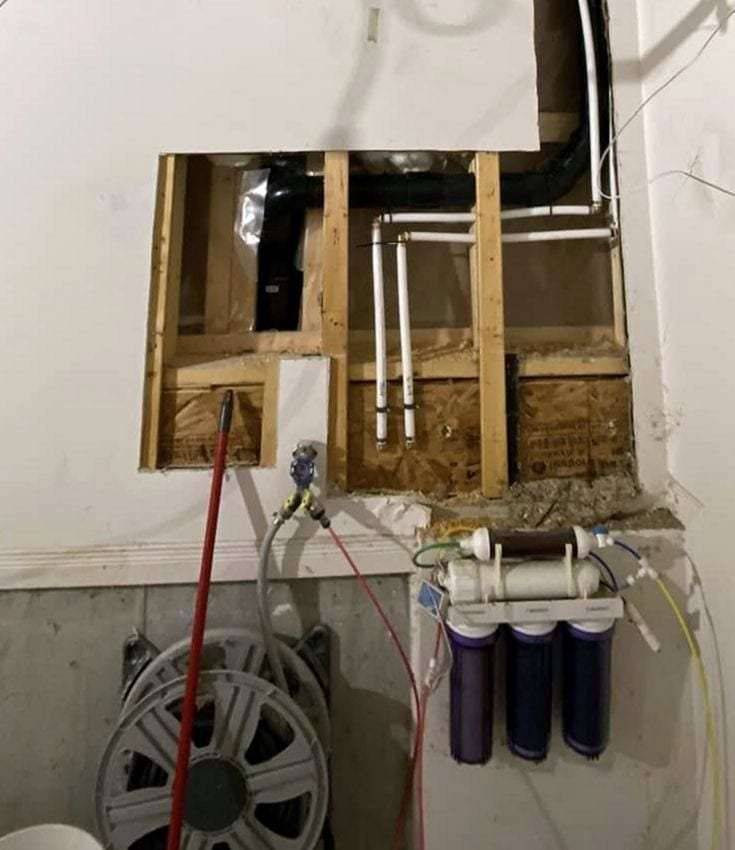
These three come from our own jobs: a drain stack and PEX supply lines in new basement framing, drain lines laid in gravel before a slab pour, and a garage wall opened between the studs to reach the supply lines. Orange test caps like the ones on those slab drains let a new line be filled and checked for leaks before concrete covers it.
Safety Points Good Plumbing Never Skips
Some parts of a plumbing job protect the people in the house more than the pipes:
- Water shutoff. Supply work starts with the water off and the lines drained, and every adult in the house should know where the main valve is.
- Gas work. Every joint on a gas line is leak-tested once the work is done, before the appliance is relit.
- Venting and combustion air. A gas water heater needs a flue that draws and enough air to burn cleanly, or it can push carbon monoxide into the house.
- Relief valves. The relief valve on a tank water heater needs a discharge pipe that ends within about six inches of the floor, and it is never capped or plugged.
- Backflow prevention. Hose bibs, boiler fill lines and lawn sprinklers need a vacuum breaker or a backflow preventer, so dirty water can’t be drawn back into the drinking water.
- Lead in older pipes. Homes built before 1986 can have lead solder, and some older houses a lead service line, so cut debris should stay out of the water, and the water provider can tell you about testing.
Permits and Inspections Under Pennsylvania’s UCC
Pennsylvania’s Uniform Construction Code, the UCC, sets the rules for building work across the state, plumbing included. Each municipality administers it, through a code office of its own or a third-party inspection agency, so the city of Lancaster and each township and borough around it handle permits within their own borders.
As a rule, plumbing work beyond simple repairs often needs a permit. Replacing a water heater and running new drain or water lines typically do; fixing a leak, clearing a clog or changing a faucet usually don’t. The details differ from one municipality to the next, so check with the office where the house sits.
What Homeowners Ask About Permits
Does replacing a water heater need a permit?
It typically does. The relief valve, its discharge pipe and, on a gas heater, the venting and gas connection are what an inspector looks at, and your municipal office can say exactly what it requires.
Can an inspection slow a job down?
It can add a wait: work that has to be inspected before it’s covered stays open until the inspector has seen it.
How do I know which office handles my house?
Go by the municipality on your tax bill, not your mailing address. Most of Manheim Township, for one, uses Lancaster 17601 addresses, and its permits go through the township, not the city.
What does a plumbing inspector look at?
On new drain and water lines, usually the rough-in before it’s covered: pipe sizes and supports, the slope of the drains, the venting, and a test that holds water or air in the new lines.
What Moves the Cost of a Plumbing Job
Two jobs with the same name can take very different amounts of work. What makes the difference:
- Access. A pipe in an open basement is quicker to reach than one behind finished drywall, under a slab or deep in a crawl space.
- Opening walls or floors. Reaching a leak can mean cutting drywall, lifting tile or breaking concrete, and patching afterward.
- Materials. Copper, PEX, PVC and cast iron cost different amounts and go together differently.
- The age of the house. In Lancaster’s older homes, new pipe often has to be joined to old galvanized or cast iron, and a corroded valve next to the leak may need replacing too.
- Parts. A common cartridge is easy to come by; a part for an older fixture may have to be ordered.
- Permits. Where one is required, the permit and its inspection are part of the job.
- Emergency or planned. Planned work leaves time to order the right part and pick the least disruptive way in; a burst pipe in a cold snap doesn’t.
Start With a Look at the Problem
Call or book an estimate, tell us what you’re seeing, and we’ll set a day for the visit.