
Fixture Repair and Installation
We install and repair faucets, toilets, garbage disposals and shower valves, and replace the worn supply lines and shutoff valves under them. Fixtures are the plumbing you handle every day, so their wear is easy to notice: a drip at the spout, a tank that refills on its own, a disposal that hums and won’t turn.
Most of those come down to one small part (a cartridge, a flapper or a seal), and a repair is often the right call. Sometimes the fixture itself is worn out, and new parts in an old body are money spent twice.
Repair or Replace, Fixture by Fixture
Age, and whether parts can still be found, decide most cases.
| Fixture | Common problems | Repair or replace signs |
|---|---|---|
| Toilet | Running between flushes, a weak flush, rocking on the floor, water at the base | Repair the flapper, fill valve or wax seal; replace a cracked tank or bowl, or a toilet that clogs every week |
| Faucet | A drip from the spout, a leak under the handle, low flow from a scaled aerator | Repair with a new cartridge or seals while parts exist; replace a corroded body or a discontinued model |
| Kitchen sink | Leaks at the basket strainer or the trap, a slow drain, a sprayer hose that leaks | Reseal the strainer or replace the trap; replace a chipped, cracked or rusted-through sink |
| Shower valve | Water too hot or too cold, a drip from the showerhead, a handle that won’t shut off | Replace the cartridge; replace the valve body when it’s corroded or parts are gone |
| Garbage disposal | Humming without turning, leaks, a reset button that keeps tripping | Clear a jam or reset it; replace a unit that leaks from its housing |
| Outdoor spigot (hose bib) | A dripping spout, a leak at the stem, a split from freezing | Replace the washer or packing on a sound one; replace a split one with a frost-proof model |
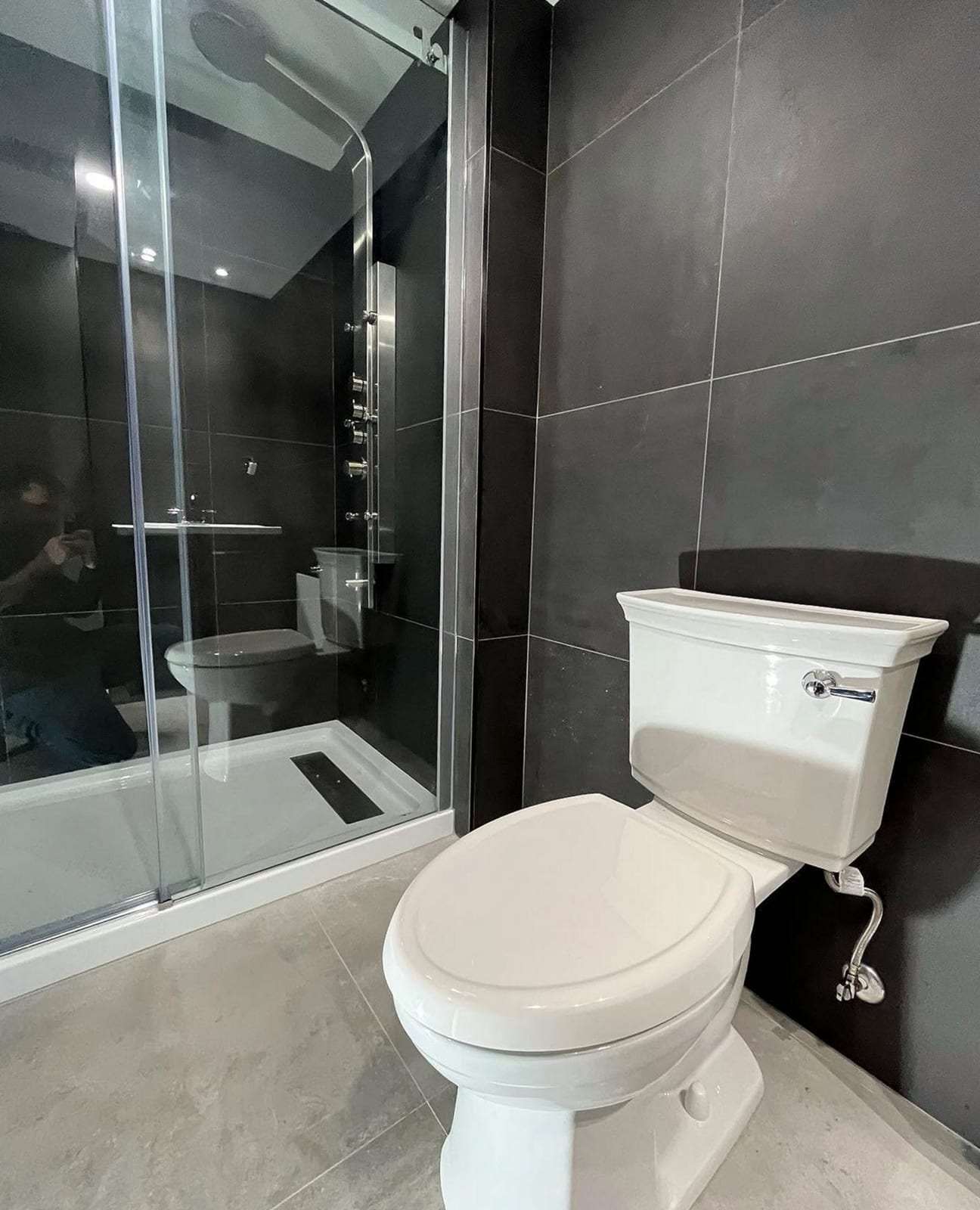
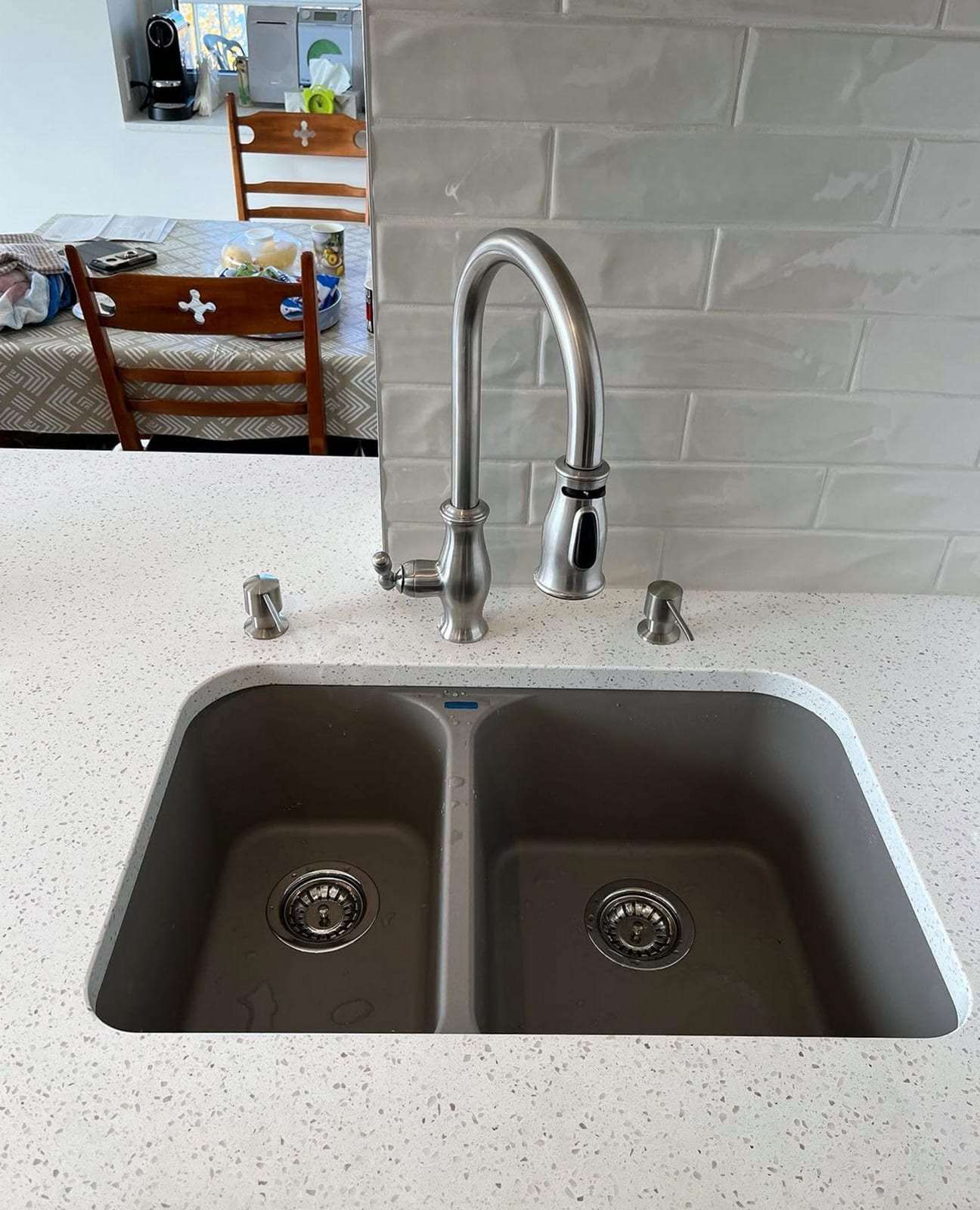
Parts are the catch with older fixtures. A faucet or shower valve from a line that’s been discontinued may have no cartridge left to buy, and then replacing the fixture is the repair.
Running Toilets and Low-Flow Choices
Why does my toilet refill by itself every so often?
Water is leaking from the tank into the bowl, usually past a worn flapper, and the fill valve tops the tank back up. Put a few drops of food coloring in the tank and wait 15 minutes without flushing: color in the bowl means the flapper or its seat is leaking. A flapper is a small part that wears out with age.
Why does water keep running into the overflow tube?
The fill valve isn’t shutting off at the right level. Either its float is set too high, which is an adjustment, or the valve is worn and needs replacing. The water should stop about an inch below the top of the overflow tube.
What does 1.28 gallons per flush mean?
It’s the most a toilet can use per flush and still carry the EPA’s WaterSense label. Federal rules have capped new toilets at 1.6 gallons since 1994, and older ones often use 3.5 or more. WaterSense toilets also have to pass a flush performance test, so the lower number doesn’t mean a weaker flush.
Will a low-flow toilet work with old drain lines?
Usually. Most older drains carry a modern toilet’s flush without trouble. Where a long drain run has little slope, or rough old cast iron inside, less water per flush can mean more clogs, so a house with a history of slow toilets is worth mentioning when you call.
Do low-flow showerheads and aerators make a difference?
Yes, without changing how you use the fixture. A WaterSense showerhead uses 2.0 gallons per minute or less, against a federal limit of 2.5, and a WaterSense bathroom faucet 1.5 or less. Hard Lancaster County water scales both up over time; a soak in white vinegar dissolves most of it.
Measure Before You Buy a New Fixture
A new fixture has to fit what’s already in the floor, the wall and the counter, and a few measurements up front save a return trip to the store.
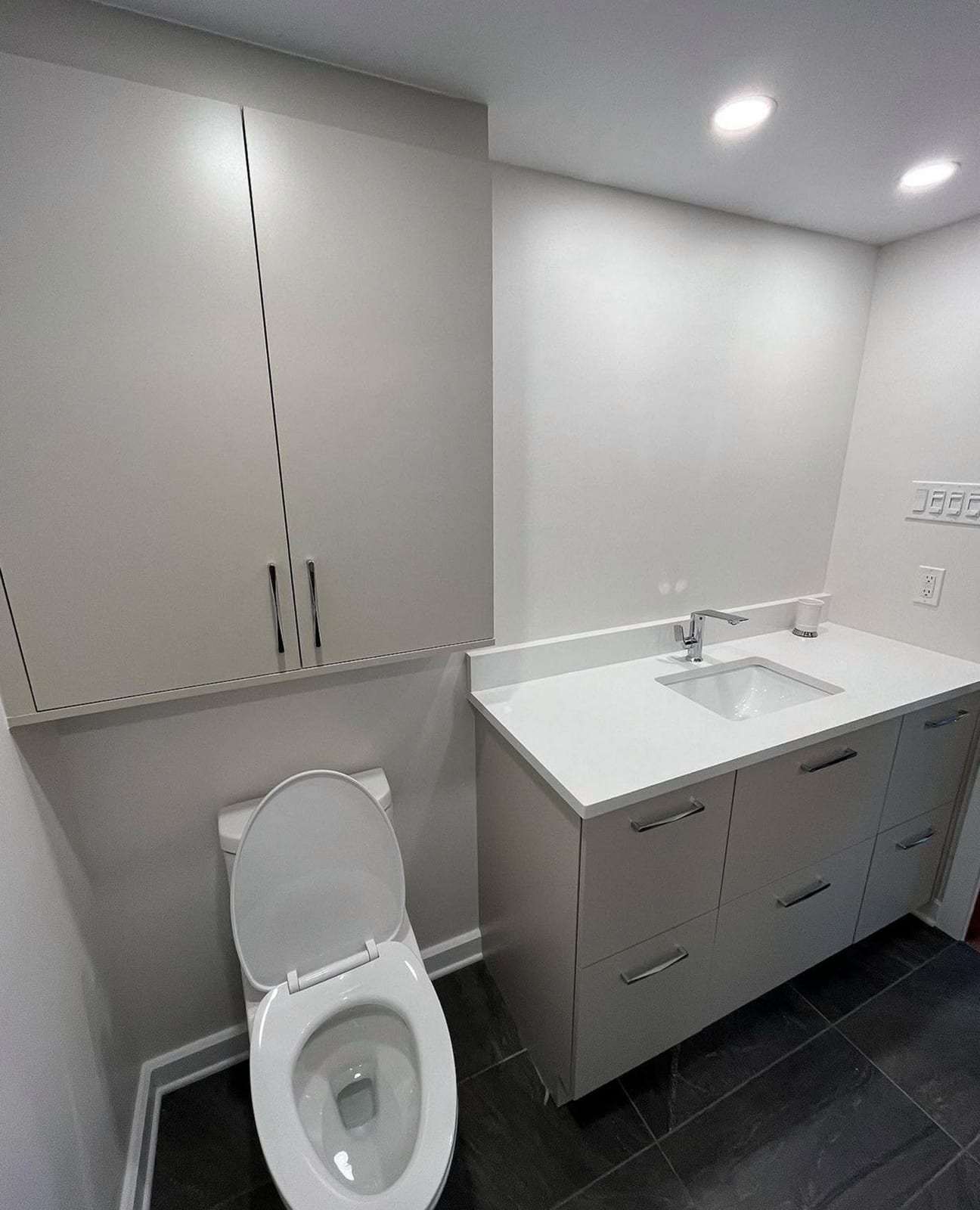
A toilet has to match the rough-in, the distance from the finished wall to the center of the floor bolts. Most houses are 12 inches; some older bathrooms are 10 or 14, and the wrong size won’t sit right against the wall.
A faucet has to match the holes in the sink or counter: one hole, or three set 4 or 8 inches apart, with a deck plate to cover any extras. A disposal needs a switched outlet under the sink, and a dishwasher hose connects to it only after a knockout plug inside the inlet is removed.
A shower valve sits inside the wall, and its trim has to come from the same maker. New valves are pressure-balancing or thermostatic, which keeps the temperature steady when a toilet flushes elsewhere in the house, and replacing the valve body means working through an access panel or opening the wall on one side.
A new fixture is also the time to look at what feeds it. If the shutoff valve under it is the old multi-turn kind, or the supply line is the original, it makes sense to replace them while everything is apart, since an old valve or hose is where a lot of leaks start.
Start With the Model Number
Parts are brand-specific, and these four things help match them:
- The brand and model. On a toilet, look for a stamp on the back wall inside the tank; on a faucet, check the box, the receipt or a tag on the supply lines; on a disposal, read the label on the bottom; on a shower, look for the brand on the handle or the trim plate.
- Photos of the fixture, the parts under it and any label, emailed to manager@musserparkplumbing.com with your name and street.
- The fixture’s age. Many toilet tanks carry a date stamp inside; a rough guess is fine for the rest.
- Whether the shutoff valves turn. Try them gently. One that won’t turn, or won’t stop the water, changes the job.
Frost-Proof Hose Bibs for Pennsylvania Winters
An ordinary outdoor spigot holds water right at the outside wall, and in a hard Pennsylvania freeze that water splits the valve or the pipe behind it. A frost-proof hose bib puts its valve at the end of a long stem, several inches inside the heated house. When it’s shut off, the water in the barrel drains out the spout, leaving nothing at the wall to freeze.
Two mistakes defeat it. A hose left connected on a freezing night holds water in the barrel, and the bib splits inside the wall, where the leak shows only when the spigot is turned on in spring. And a bib set level, or tipped toward the house, can’t drain; it needs a slight slope down to the outside.
An older spigot without that design needs its inside shutoff closed and the outdoor valve opened to drain each fall, part of the autumn routine for any house. Replacing it with a frost-proof model sized to the thickness of the wall takes that chore off the list.
Stop the Drip or Put In the New Fixture
A running toilet, a faucet that won’t stop dripping or a new disposal going in: send the details or call.