
Plumbing Services in Lancaster, PA
Plumbing trouble in a house starts in one of a few places: the drains and sewer line that carry water out, the water heater, the pipes and valves that bring water in, or the fixtures at the end of them. We work on all of them in Lancaster and the towns around it, a dripping spout as much as a sewer lateral full of roots, and most problems point to one of them once you know what to look for.
Drains, Heaters, Pipes, Sewers and Fixtures
Drain Cleaning
Slow and stopped drains in kitchens, bathrooms, laundry rooms and basement floor drains. The first question is where the clog sits: in one fixture’s line, or in the main line that every drain in the house shares.
Covers: grease, hair, wipes, laundry lint, floor drains that back up
Water Heaters
Tank and tankless water heaters repaired, or replaced when the tank itself is done. A replacement should be sized for the household’s busiest hour and matched to the fuel the house already has.
Covers: no hot water, leaks at the base, popping tanks, size and fuel
Pipe Repair
Leaks found and fixed in supply and drain lines, and worn supply lines and shutoff valves replaced. In older houses with galvanized pipe, the real question is often whether to keep patching or to repipe.
Covers: pinhole leaks, ceiling stains, low pressure, stuck shutoff valves
Sewer Lines
Backups, root intrusion and broken laterals in the line between the house and the sewer main. Most of the trouble lives in old clay and cast iron pipe that tree roots have found.
Covers: several slow drains at once, gurgling toilets, sewage smells, wet spots in the yard
Fixtures
Faucets, toilets, garbage disposals and shower valves repaired or installed. A drip or a running toilet usually needs a part, not a whole new fixture.
Covers: running toilets, dripping faucets, jammed disposals, shower valves, outdoor spigots
Emergency Plumbing
A burst pipe, a sewage backup or a water heater letting go. The first minutes matter most, and most of what matters in them is knowing which valve to close.
Covers: the main water shutoff, the water heater, frozen and burst pipes, a gas smell
Sump Pumps for Basements That Take On Water
Sump pump installation is part of our work too. A sump pit collects the groundwater that drain tile carries away from the foundation, and the pump lifts it out through a discharge line before it reaches the basement floor. In a wet Pennsylvania spring, or during a summer downpour, a weak pump is the difference between a damp corner and standing water.
A pump is due for replacement when it hums without moving water, runs with the pit nearly empty, switches on and off every few seconds, or its float catches on the side of the pit. Where there’s no pit at all, one has to be cut into the slab first, which makes it a bigger job than swapping a pump. Where the water goes matters too: it should come out well away from the foundation, and many sewer authorities don’t allow sump water into the sanitary sewer. To get started, book an estimate for a sump pump and tell us when the water comes in and where it shows.
Match the Symptom to the Work
Most calls start with a symptom, not the name of a service. The usual ones line up like this:
| What you notice | Likely service | Page |
|---|---|---|
| One sink, tub or toilet draining slowly | Drain cleaning on that fixture’s line | Drain Cleaning |
| Several drains slow at once, or water rising in the basement floor drain | Main line or sewer lateral repair | Sewer Lines |
| Gurgling toilets and a sewage smell in the basement | Sewer line repair, unless it’s just a dry floor drain trap | Sewer Lines |
| No hot water, or hot water that runs out early | Water heater repair | Water Heaters |
| Water around the base of the water heater | Repair, or a new heater if the tank leaks | Water Heaters |
| A ceiling stain, a damp wall or a water bill that jumped | Leak repair | Pipe Repair |
| Weak pressure at every tap in an older house | Pipe repair or repiping | Pipe Repair |
| A running toilet, a dripping faucet or a jammed disposal | Fixture repair | Fixtures |
| A shower that swings between hot and cold | Shower valve repair | Fixtures |
| Water on the basement floor after heavy rain | Sump pump installation | Book an Estimate |
| A burst pipe, or sewage coming up a drain | Emergency plumbing: shut the water off first | Emergency Plumbing |
Some problems don’t sort this neatly: a noise inside a wall, a smell with no leak in sight, pressure that comes and goes. A few safe checks of your own narrow those down before you call.
Rentals, Tenants and Small Commercial Spaces
Landlords and property managers book the same way homeowners do. When you book an estimate, mark the property as a rental or commercial, and tell us who lives or works there, who can let us in, and who has the say on the work, since work starts once the plan is agreed.
It also helps to know where each unit’s water shutoff is, and which units share a water heater or a drain stack. A clog in a shared stack backs up into the lowest unit first, wherever it started, so the tenant who calls about it may not be the one whose drain caused it.
Work We’ve Done in Kitchens, Baths and Basements
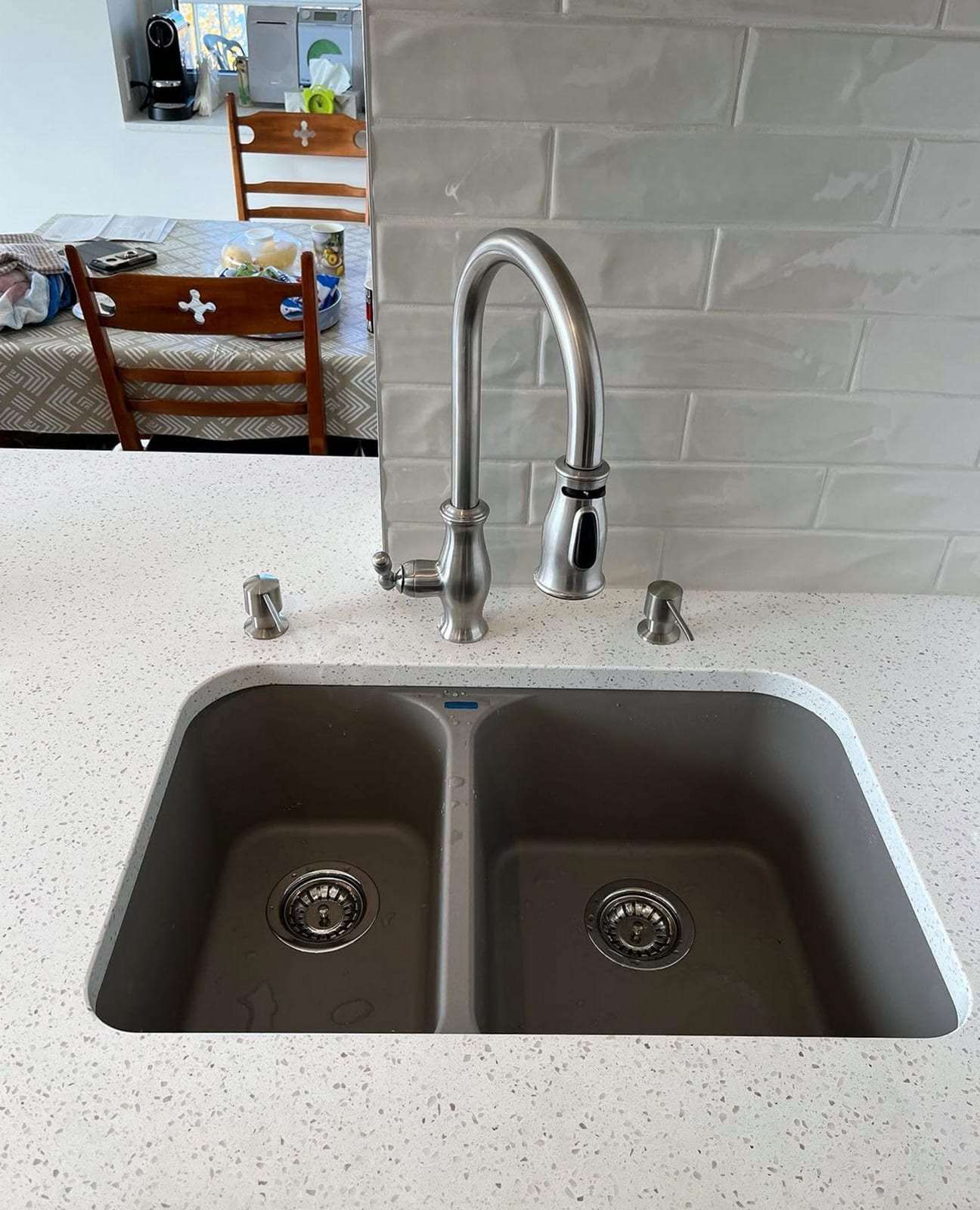
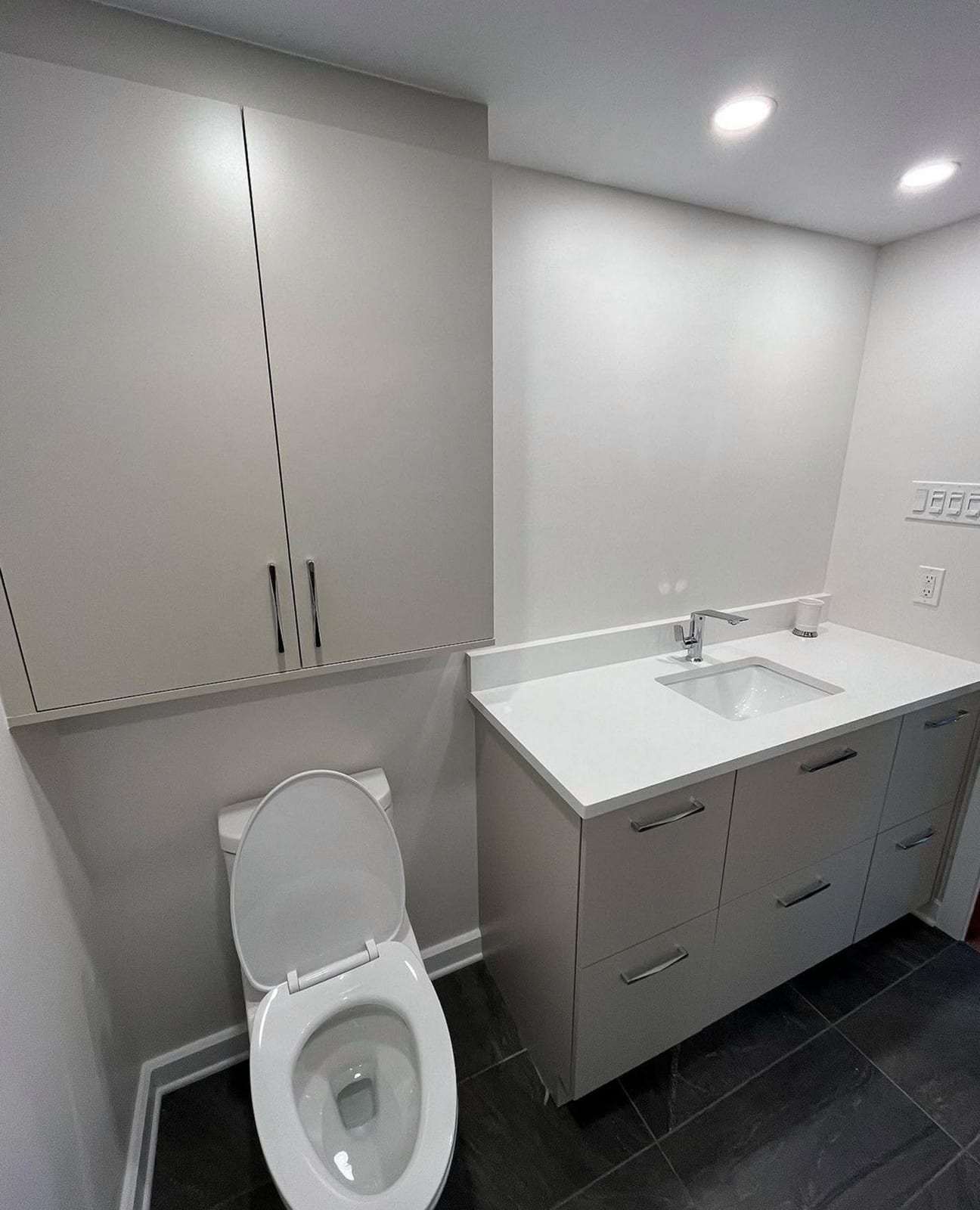
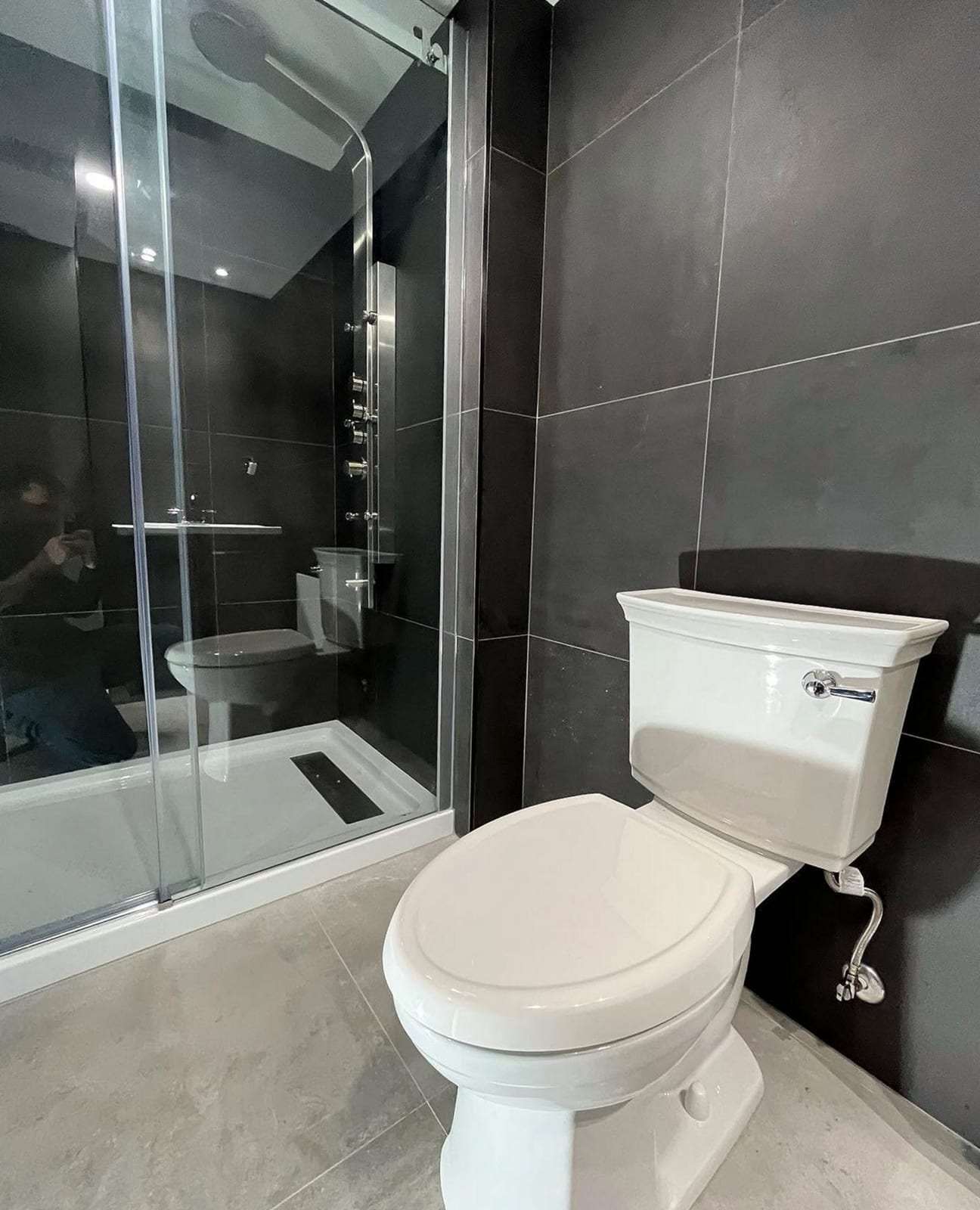
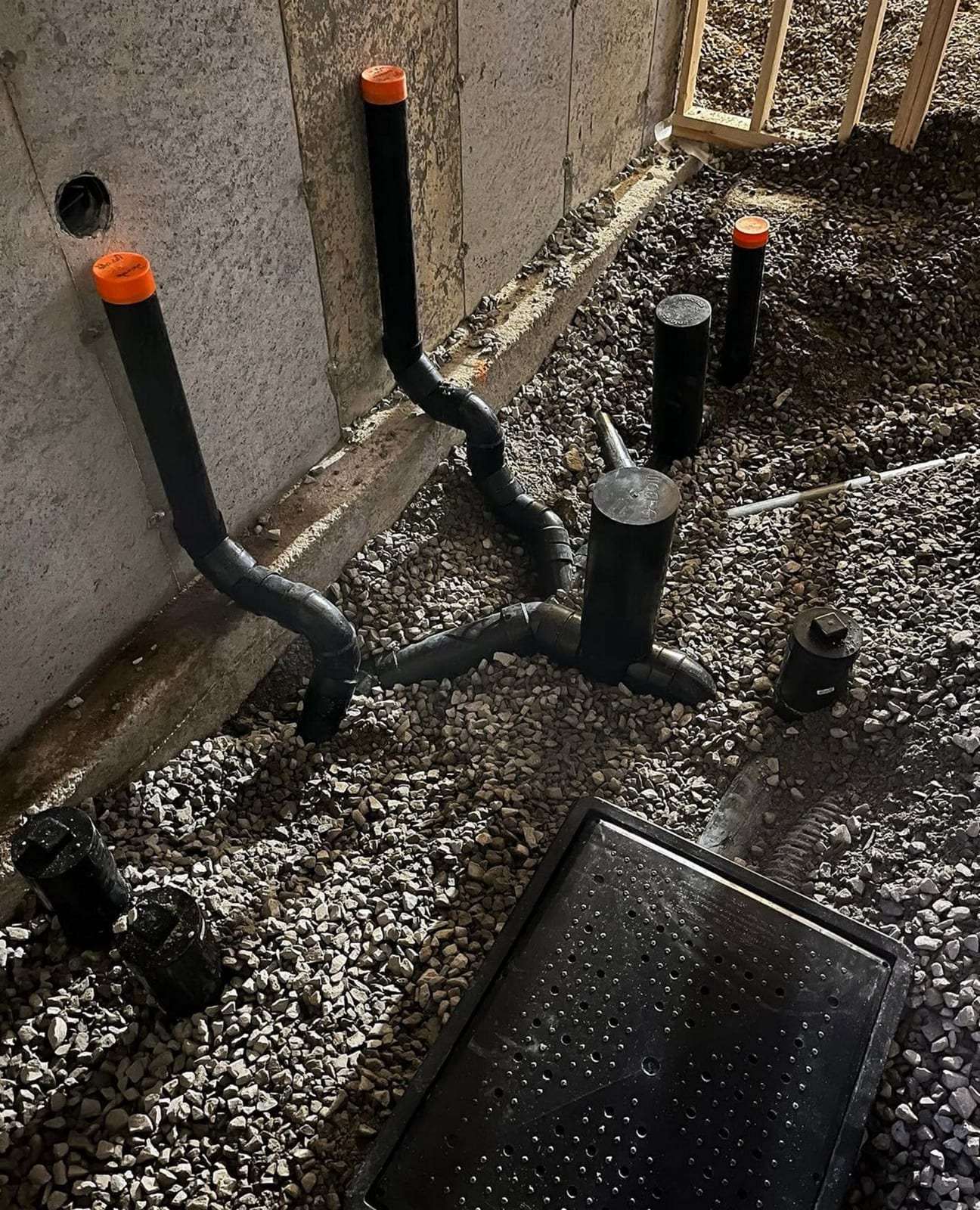
A few of our own jobs: a double-bowl kitchen sink under a high-arc faucet, a toilet set beside a new vanity, a glass shower with its toilet, and drain lines laid in gravel with their test caps still on, before the basement slab was poured.
Call With the Symptom, Not the Service
You don’t need to know which of these it is. Call or book an estimate and describe what you’re seeing and where in the house it is.