
Pipe Repair and Repiping
Most leaks start small and out of sight: a pinhole in a copper line above a ceiling, a rusted thread on old galvanized pipe, a supply hose that weeps under a sink. We repair leaks on supply and drain lines, replace worn supply lines and shutoff valves, and replace whole runs of pipe once patching stops holding.
Two questions decide every job: where the water is really coming from, and what the pipe is made of.
Signs of a Leak You Can’t See Yet
Water travels before it shows. It runs along a joist or the outside of a pipe, so a stain can appear several feet from the fitting that’s actually leaking. These signs deserve a closer look:
- Water stains, bubbling paint or a soft spot on a ceiling or wall.
- A water bill that climbs while the household’s habits haven’t changed.
- Low pressure at one fixture, or all over the house.
- Damp basement walls or a musty smell where pipes run. A wall that stays wet through a dry week points to a pipe, not groundwater.
- Warped flooring or loose tile around a tub or toilet.
- The sound of running water with every faucet and appliance off.
The water meter makes a good test. Turn off every faucet and every appliance that uses water, then find the meter, often in the basement where the water line comes through the front wall. Most meters have a small triangle or star dial that turns with the slightest flow. If it moves while nothing is running, water is leaving the pipes somewhere.
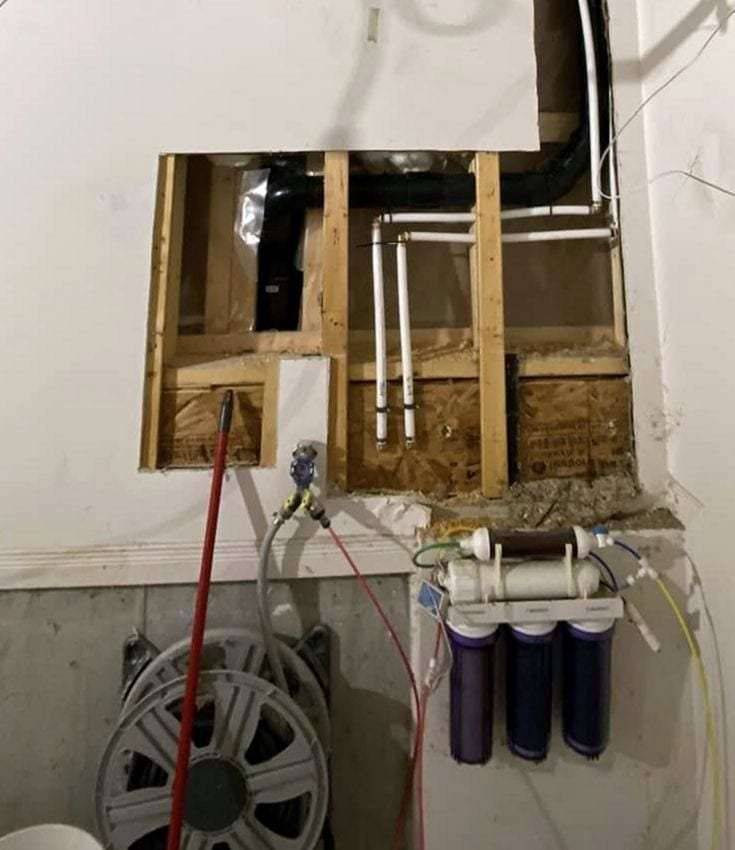
Finding a hidden leak often takes longer than fixing it. A plumber traces the water back along the pipe, matches the stain to the lines above it, and opens the wall or ceiling only where the evidence points, often a single bay between two studs, so the patch afterward stays small.
The Pipe Material Decides the Fix
Each kind of pipe fails in its own way, and the age of the house is a fair first guess at what’s behind its walls.
| Pipe material | Where it is found | Typical age of home | Common problems | Usual fix |
|---|---|---|---|---|
| Galvanized steel | Older supply lines, often runs left over from earlier repairs | Built before about 1960 | Rust closing the pipe from inside, low pressure, brown water, leaking threads | Replace the run with copper or PEX; a patch tends to move the leak to the next joint |
| Copper | Supply lines and water heater connections | 1950s to now | Pinhole leaks, green corrosion at joints, splits after a freeze | Cut out the bad section and solder or press in new pipe |
| CPVC and PVC | CPVC (cream or tan) for supply lines; white PVC for drains and vents | PVC from the 1970s; CPVC mostly 1980s–2000s | CPVC turns brittle and cracks at fittings; PVC cracks where it’s struck or poorly supported | Replace the cracked fitting or length; brittle CPVC often means the whole run |
| PEX | Supply lines in newer homes and in repipes | Late 1990s to now | Leaks at a poorly made crimp or fitting, damage from sunlight or rodents | Replace the fitting or splice in a new length |
| Cast iron | Drain and vent stacks, and the main drain under the basement floor | Built before about 1975 | Rust-through along the bottom, cracked hubs, scale narrowing the drain | Cut out the bad section and join in PVC or ABS with no-hub couplings |
| Lead | The service line from the street into the basement | Mostly built before about 1950 | Lead in drinking water, worst after water sits in the line | Replace the whole line, planned with the water provider |
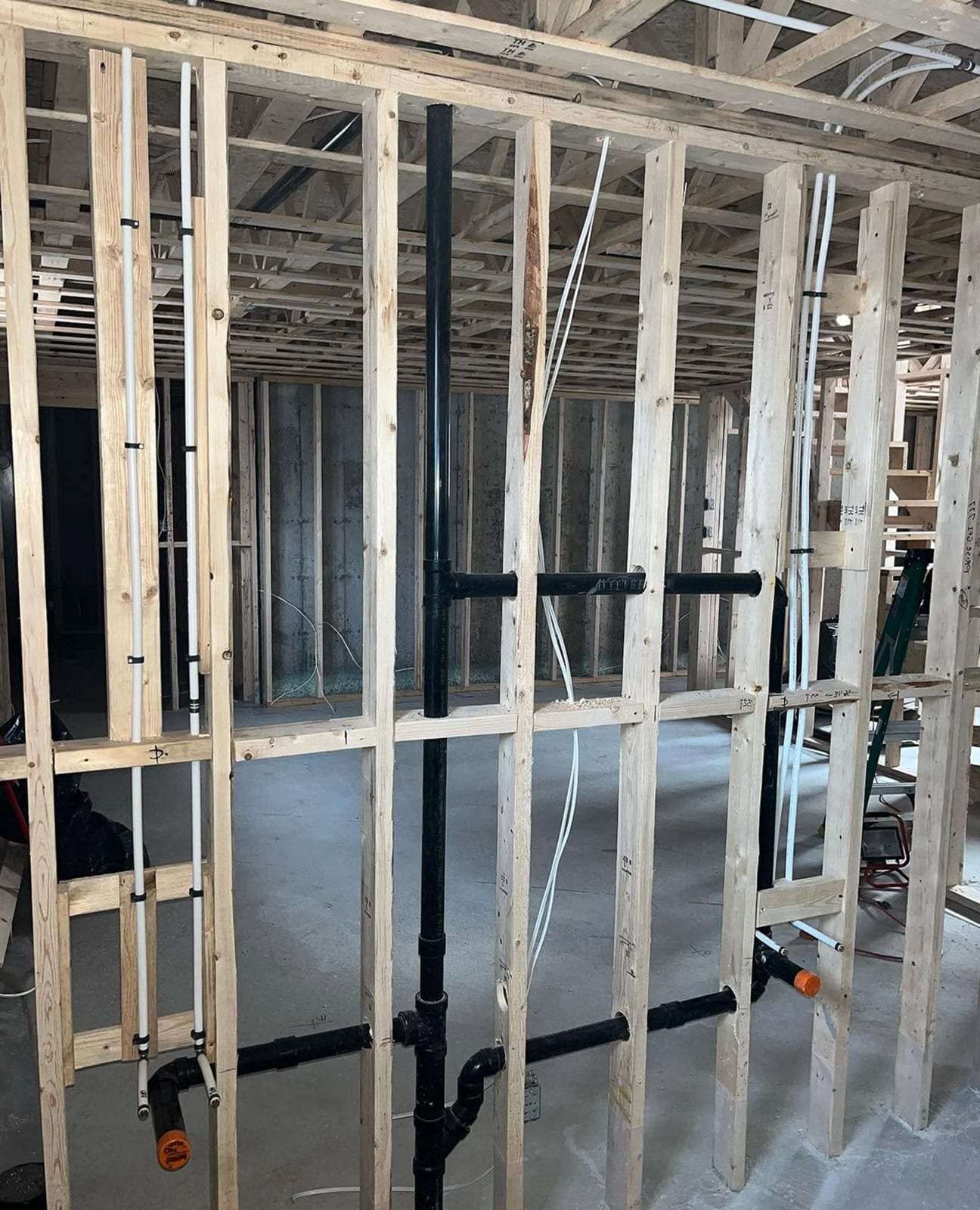
New work runs PEX for supply and PVC or ABS for drains, and the same materials replace old pipe: PEX bends around corners in one length, so fewer fittings end up hidden in walls.
Galvanized and Lead Pipe in Pre-War Row Homes
Many of Lancaster’s pre-war row homes were plumbed with galvanized steel, and plenty still have some of it, often in runs earlier owners never replaced. Galvanized rusts from the inside and narrows a little every year, which is how a house ends up with good pressure at the basement sink and a trickle at the upstairs shower. The threads at each joint are the thinnest part of the pipe and usually leak first.
Lead turns up in the service line, the pipe that brings water from the main under the street into the house. Lead pipe is dull gray and soft: scratch it lightly with a key and it shows bright silver, and a magnet won’t stick to it, as it will to galvanized steel. Galvanized pipe that sat downstream of a lead line can also carry lead in the scale inside it.
The water provider usually owns the service line from the main to the curb stop, and the property owner the rest, so ask the provider whether its records show lead on your street and how to get the water tested. Until the line is replaced, run the cold tap until it turns noticeably colder after water has sat for hours, and drink and cook only with cold water. On the house side, lead and the galvanized pipe behind it come out like any worn-out run: by repiping.
Patching a Leak or Repiping the House
Does one pinhole leak mean the house needs new pipe?
Not by itself. A single pinhole in copper can come from one bad spot, such as flux left inside a joint or a burr where the pipe was cut, and a new section there can last for years. A second and third pinhole in the same run within a year or two mean the pipe wall is thinning along its length, and each patch after that buys less time.
When does a repipe make more sense than another repair?
When leaks keep turning up in different spots on the same pipe, when galvanized lines have closed up enough that pressure is poor all over the house, when lead is involved, or when walls are already open for a remodel. A repipe is the bigger job, but it replaces a string of separate repairs, each with its own patched ceiling, with one.
Does repiping mean opening every wall?
No. New lines can usually run through the basement ceiling, closets and the backs of cabinets, with walls opened only where a line has to rise to a fixture. Flexible PEX helps, since it pulls through spaces rigid pipe can’t reach without more openings. Old plaster takes more care to open and patch than drywall.
Can copper and PEX be mixed in one house?
Yes. Transition fittings join them, and many repairs replace a damaged length of copper with PEX. One thing to check: in older houses the electrical ground was often clamped to the metal water pipe, and a plastic section breaks that path. An electrician can add a bonding jumper so the ground stays continuous.
Worn Supply Lines and Stuck Shutoff Valves
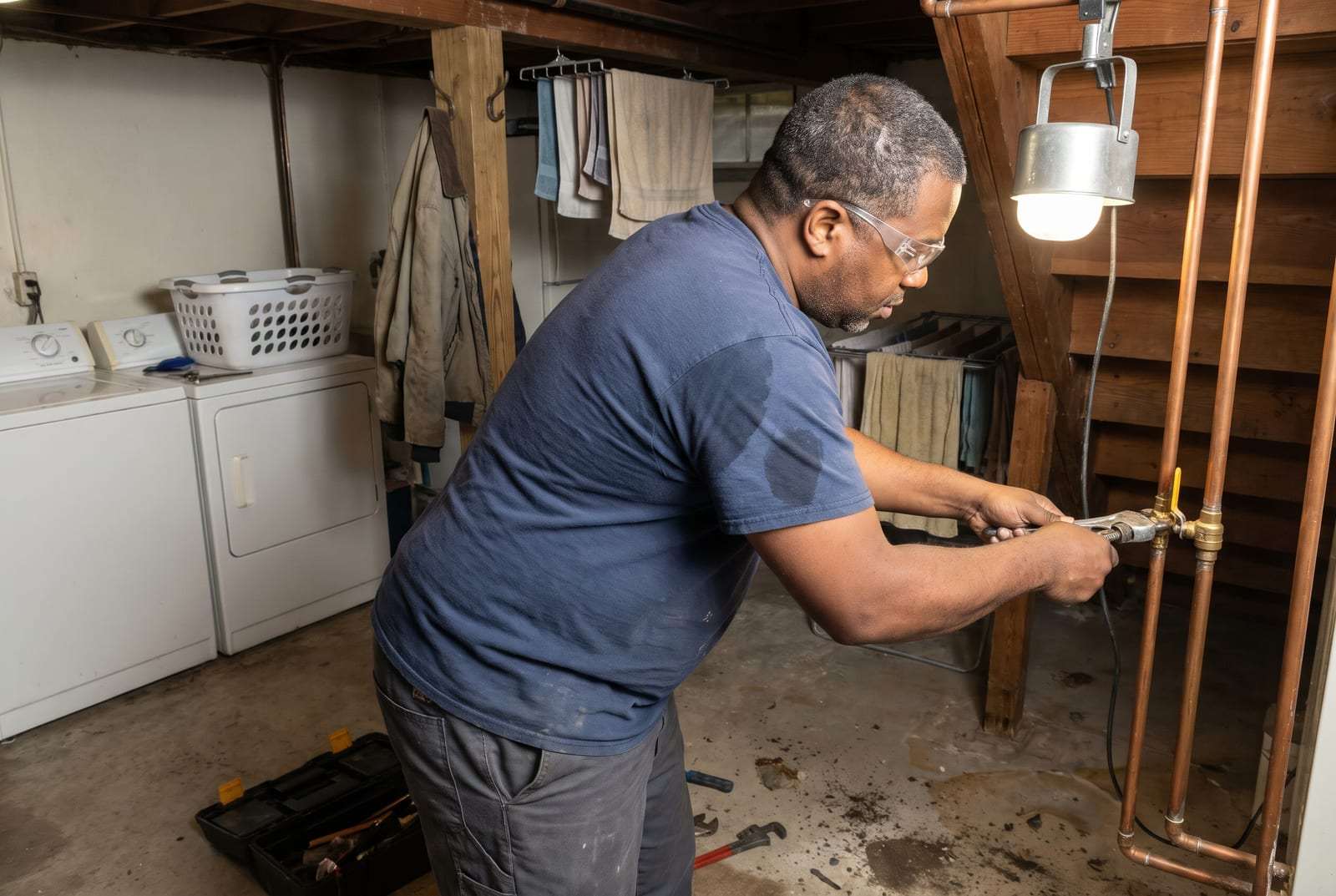
We replace worn supply lines and shutoff valves, two small parts behind a lot of water damage. The braided hoses that feed faucets and toilets have a rubber tube inside the braid and a nut at each end. With age the rubber hardens and the nuts crack, and a hose can let go at full pressure. A bulge, rust on the braid or a hairline crack in a nut means it’s due.
Shutoff valves fail quietly. The older multi-turn kind, with a round handle, sits open for years while minerals build up on its stem, and when it’s finally needed it won’t turn, won’t close all the way, or starts dripping at the stem. A quarter-turn ball valve closes with a lever and seals far more reliably. Try the valves under your sinks and behind your toilets once a year, while nothing is leaking.
Pipes That Freeze in a Pennsylvania Winter
Pennsylvania winters find the same weak spots every year: pipes in exterior walls, crawl spaces and attached garages, and under kitchen sinks on an outside wall. A pipe usually freezes where outside air reaches it, through a gap at the sill, an open foundation vent or an uninsulated bay.
The split doesn’t always open where the ice forms. Pressure builds between the ice and a closed faucet, so the pipe can burst a few feet away and stay dry until it thaws. Copper and galvanized split; PEX stretches and usually survives, though its fittings may not.
If a pipe has already burst, shut off the main and follow the first steps for a burst pipe. When the same line freezes twice, a new section of pipe isn’t the whole repair: insulating the bay, sealing the air leak beside it or moving the line to an inside wall keeps it from freezing again.
Get the Leak Found and Fixed
A stain that keeps spreading, a meter that won’t stop turning or a valve that won’t close is reason enough to call. Send the details or phone the shop.