
Sewer Line Repair and Replacement
Every drain in the house ends in one pipe. Under the basement floor the drains join the building drain, which leaves through the foundation as the sewer lateral and runs under the yard to the public main. When that line cracks, sags or fills with roots, the trouble shows up all over the house, usually first at the lowest drain.
We repair sewer lines, and the ones in trouble tend to belong to older properties, where the lateral may be clay or cast iron laid generations ago.
Signs the Sewer Line Is the Problem
One slow sink is usually a clog in that sink’s own drain, the kind drain cleaning clears. The sewer line is the suspect when the signs involve more than one fixture:
- Gurgling from a toilet or tub when the washer drains or another toilet flushes.
- Several drains slow at once, worst on the lowest floor.
- Water rising through the basement floor drain when fixtures upstairs run.
- A sewage smell in the basement, or outside along the line.
- Wet, sunken or unusually green strips of lawn between the house and the street.
If sewage is coming up into the basement, stop using water: every flush and every load of laundry adds to it.
What a Sewer Camera Shows
A camera inspection is how the trade usually settles what’s wrong with a lateral. A waterproof camera on a push cable goes in through a cleanout and travels the line, showing roots at the joints, cracks, offset joints, flattened pipe and bellies, the low spots where waste sits. A transmitter in the camera head lets the trouble spot be found from above and marked on the lawn.
The footage decides the repair. Roots in an otherwise sound pipe can be cut out; one broken joint can be fixed on its own; a line cracked along its length, or collapsed, has to be replaced. Clearing a backup without looking can leave the cause in place.
Tree Roots and Old Clay Laterals
Clay sewer pipe was laid in short lengths, so an old lateral has a joint every few feet, sealed with mortar or tarred rope that loosens with age. Roots go after the moisture at those joints: a hair-fine root works its way in, thickens, and grows into a mat that catches paper and waste.
Lancaster’s older streets, with mature shade trees above laterals laid long ago, see this most. Cutting the roots out clears the line, but the joint stays open and they grow back, often within a year or two. A lasting fix seals the joint from inside with a liner or replaces the damaged section, and new trees do best planted well away from the line.
Sewer Pipe Materials by Era
The age of the house is a fair guide to what its lateral is made of.
| Material | Era | Typical problems |
|---|---|---|
| Clay | Late 1800s through the 1960s | Roots at the many joints, cracked or offset sections, collapse under heavy loads |
| Cast iron | Late 1800s through the 1970s, most often near and under the house | Rust and scale narrowing the pipe, cracks along the bottom, failing lead-and-oakum joints |
| Orangeburg | About 1945 to the early 1970s | Tar-soaked wood fiber that softens, blisters and flattens into an oval until it collapses |
| PVC | 1970s to now | Joints that pull apart, or sags that hold water where the trench settled; roots only at a failed joint |
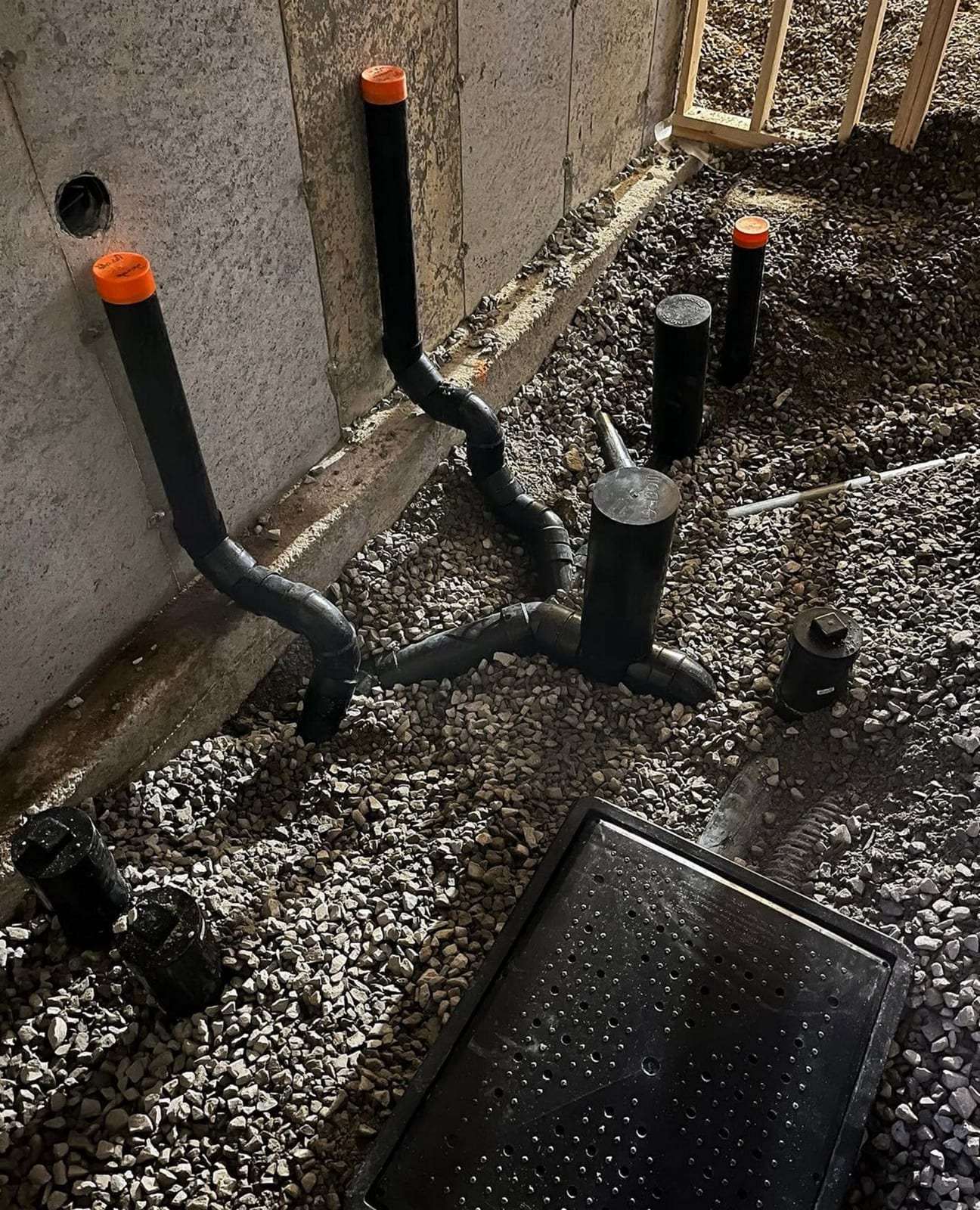
Inside the foundation, the building drain under the basement floor fails in the same ways. In older houses it’s usually cast iron, which can rust through along the bottom where nobody sees it. Newer houses run PVC or ABS plastic under the slab, bedded in gravel, capped and filled with water to test the joints before the concrete is poured.
From upstairs, a broken building drain looks like a failing lateral: slow drains and backups at the lowest fixture. A camera run from a basement cleanout tells the two apart, and a repair under the slab means cutting the floor open over the break, replacing the section and patching the concrete.
Digging a Trench or Repairing in Place
A damaged lateral can be dug up and replaced, or repaired from the inside with far less digging, the methods the trade calls trenchless. Which one fits depends on the pipe’s condition, its depth and what sits on top of it.
| Method | Disruption | Best conditions | Limits |
|---|---|---|---|
| Open-trench repair or replacement | A trench along the line, or a pit over one break; lawn, plantings or paving above it are dug up and put back | Collapsed or badly sagging pipe, shallow lines, a single break that’s easy to reach | The most digging; a deep line, or one under a driveway, porch or tree, means more to remove and restore |
| Pipe lining (cured-in-place) | One or two small access points; the old pipe stays in the ground | Cracked pipe and root-damaged joints in a line that still holds its shape | Can’t fix a collapsed line or a belly, and the liner narrows the pipe slightly |
| Pipe bursting | A pit at each end; a bursting head breaks the old pipe apart and pulls new pipe in behind it | A whole run of clay, cast iron or Orangeburg in fairly straight ground | Struggles with sharp bends and with other utilities buried close to the line |
| Spot repair | One small excavation, or a short liner set from inside | A single cracked or offset joint in an otherwise sound line | Only as good as the rest of the pipe; a line failing in several places needs more |
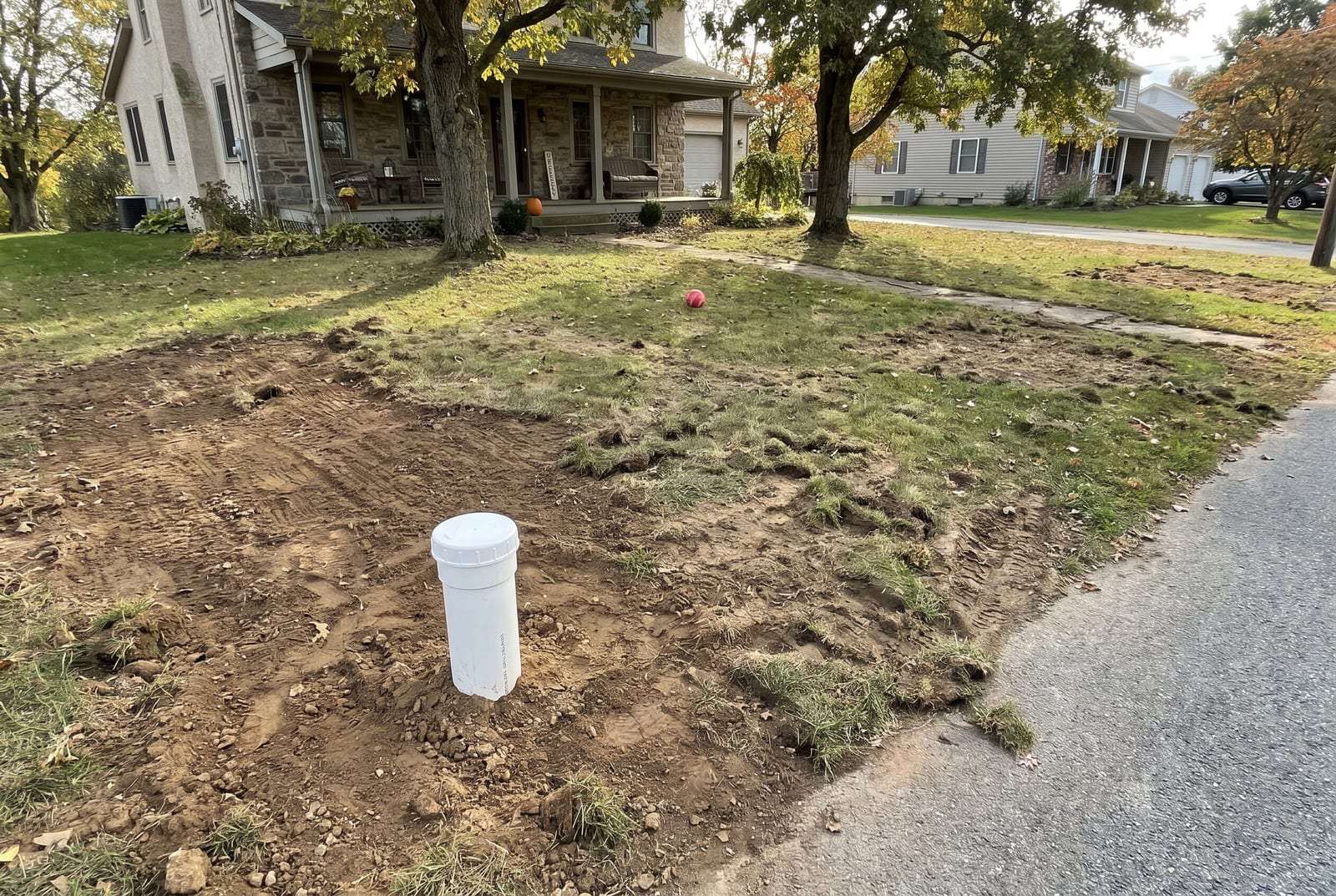
Either way, many repairs add a cleanout near the house where there wasn’t one: a capped pipe at the surface that gives a straight path into the lateral for the next cleaning or camera inspection.
Call 811 Before Anyone Digs
Pennsylvania law requires anyone digging, homeowners included, to call 811 at least three business days before the work starts. PA One Call passes the notice to the utilities, which mark their buried lines with paint or flags. The marks cover the utilities’ lines, not private ones such as the sewer lateral itself.
Who Owns the Lateral and Who to Ask
Who owns the sewer line between my house and the main?
In most places the property owner owns the lateral and is responsible for keeping it working. Where the owner’s part ends varies: at the property line, at the curb, or at the main itself, connection included. The local sewer authority’s rules decide it.
How do I find out whose rules apply to my house?
Inside Lancaster city limits, the city sets them; outside, a township, borough or regional sewer authority does, and the rules differ from one to the next. The sewer bill names the one that serves the house. That office can tell you where your part of the lateral ends, whether it has a record of where the line meets the main, and whether work on it needs a permit.
What if the blockage is in the main under the street?
Then it belongs to whoever owns the main. If neighbors back up at the same time, or the manhole in the street is full, call the city or the sewer authority first. A backup in one house alone usually means the lateral or the building drain; for sewage already in the basement, follow the first steps for a backup.
Before the Next Sewer Backup
Gurgling drains and a basement drain that backs up rarely fix themselves. Call, or send the details while the line still flows.